
In product design, we often focus on the usability of the final interface. We analyze heatmaps, run usability tests, and obsess over user flows. But the internal process, the "invisible interface" between team members is often the biggest determinant of product quality.
As a Product Designer with around 8 years of experience, I’ve seen my share of difficult bugs. But one recent incident reminded me that the most destructive technical problems are often just symptoms of social failures.
It wasn't a failure of code syntax or database architecture. It was a failure of communication.
The Project That Started Bleeding Bugs
The setup was a standard high-velocity environment. I was leading the design effort within a cross-functional squad of ten - a multidisciplinary mix of designers, developers, and testers. While the team was large, my day-to-day execution required working especially closely with two senior developers who were responsible for the core architecture.
Early on, I sensed an underlying personal conflict between these two. Recognizing it as a potential risk to the project’s success, I addressed it directly. I mediated as best I could and received assurances that this conflict would "never affect their work".
On the surface, everything went smoothly. They communicated only about work affairs, with polite professionalism. We continued our sprints, launched features, and life went on.
Then, the project started facing unusual problems. With almost every new feature implementation, we faced a series of unexpected, critical bugs. They were erratic and frustrating.
The Root Cause Analysis (Digging Deeper)
Given my role, leading end-to-end problem solving, I couldn't just pass this back as a "dev problem". As a designer who also "vibe codes" (leverages AI to build and understand backend stacks), I decided to dig into the technical implementation to find the bottleneck.
My goal was simple: understand why clean design specifications were meeting messy execution.
The technical problem was identified quickly: a lack of code optimization and heavy redundancy, creating unexpected state management conflicts.
But the real root cause analysis (the "Why" behind the "How") was something entirely different. It was the personal conflict I had been told was under control.
The Social Engineering of a Bug
This is exactly what happened in the stack:
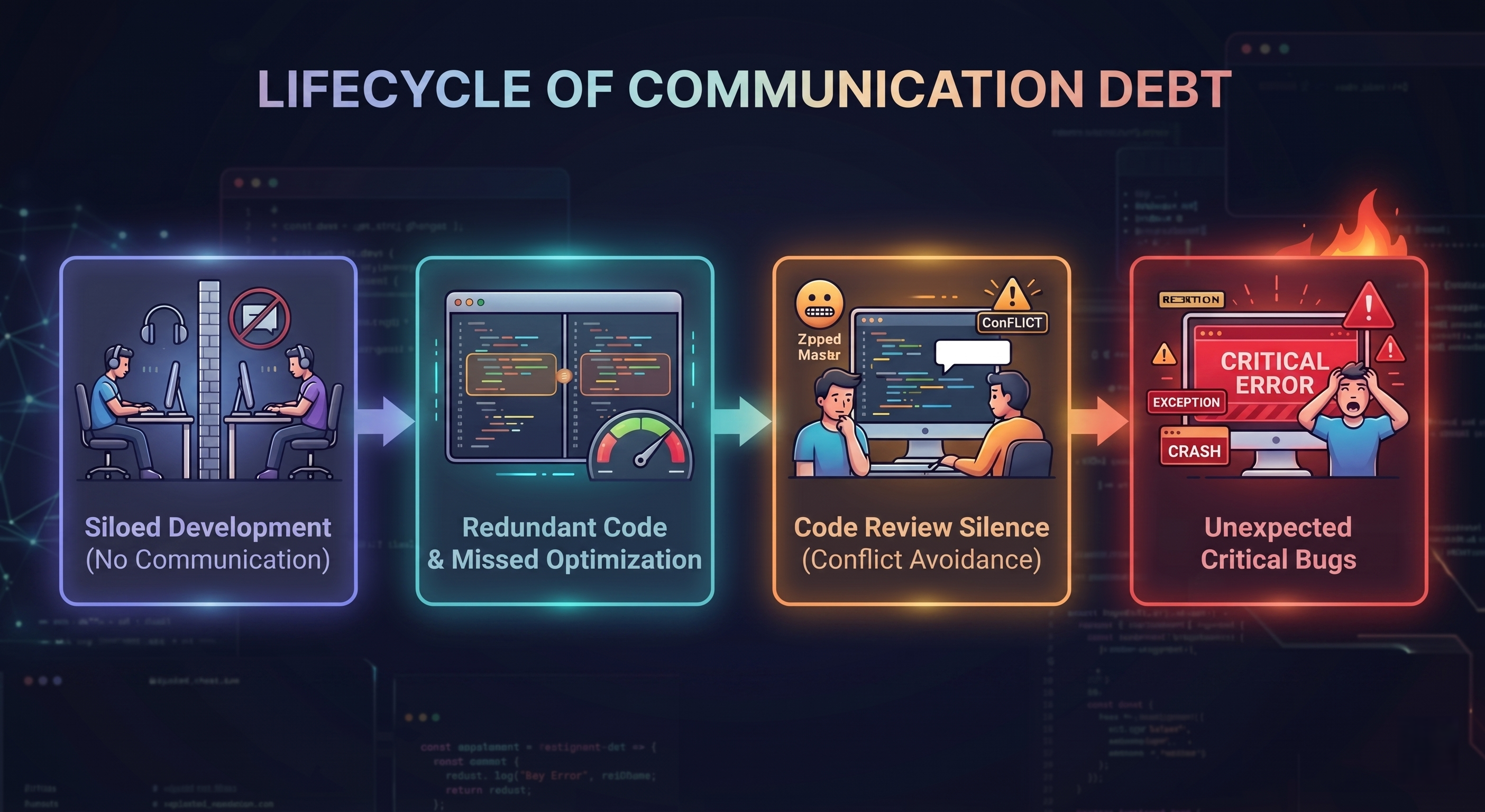
- The Architecture Opportunity: Early in development, Developer A had created an elegant, reusable structure for a component type. This was best practice.
- The Missed Optimization: Developer B, responsible for a different but related part of the feature, decided not to reuse A's structure. Instead, B built an entirely separate but visually similar structure, significantly increasing code length and complexity.
- The Moment of Silence: When Developer A saw this during a review, A pointed out the opportunity to use the reusable structure. Developer B, defensive because of the conflict, countered that the new code "was working fine".
And here is the critical point: Developer A left the issue unattended.
Why? Not because he was lazy. Not because he was incompetent. But because he didn't have the emotional bandwidth to have a difficult technical conversation with someone he was conflicted with.
He admitted to me later: He didn't want Developer B to feel embarrassed. He was worried that if he kept pushing, B would see it as A being adamant, arrogant, or acting out of a personal grudge.
The Invisible Friction Factor
The root of this massive technical debt was a lack of emotional and personal connection. It reminded me of a core truth in product development:
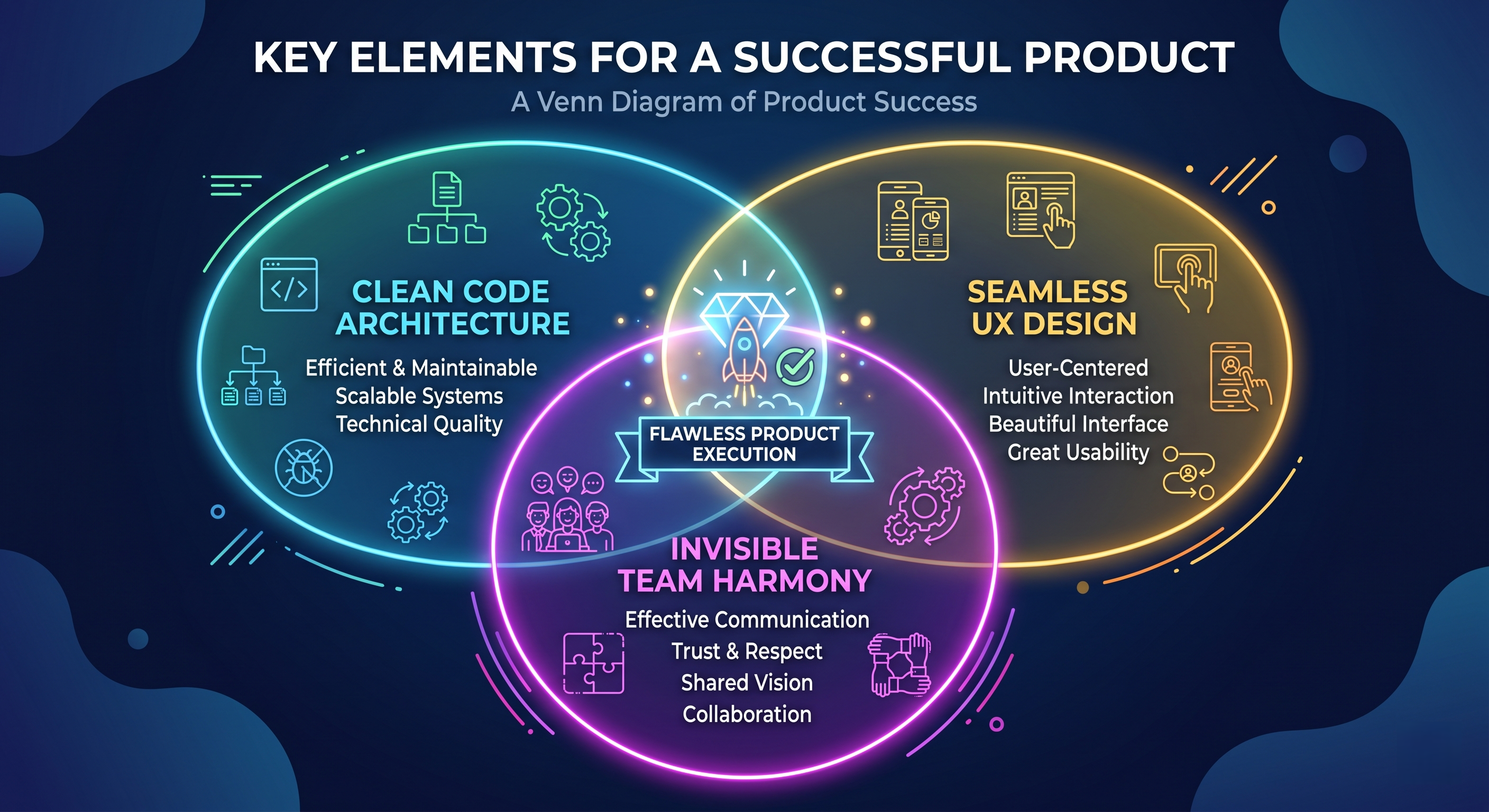
"When team harmony is invisible, the product is seamless. When it breaks, the seams show in the product.
Consider what would have happened differently in a healthy team dynamic:
- The Open Dialogue: Instead of a defensive exchange, there would have been a collaborative review. A simple, "Hey B, I noticed we have two similar structures here. Should we look at merging them to keep the repo clean?" would have been met with curiosity rather than caution.
- The Shared Ownership: Either developer would have felt comfortable stepping in to help optimize the other’s work without it being perceived as an overreach or a personal slight.
- The Informal Sync: At the very least, they might have talked about the architectural choice over coffee and would likely have caught the redundancy long before it reached the "critical bug" stage.
None of this happened. All because they had a personal conflict.
When your team is reduced to "talking only related to work affairs", you lose the informal collaboration and psychological safety required to critique each other honestly. They stop prioritizing product excellence and start prioritizing conflict avoidance.
Designing the Internal Team Process
My core philosophy is that "Great design should feel invisible."
As product designers, our job goes beyond the Figma canvas. We must also design the internal environment. This incident taught me three critical lessons in strategic problem solving:
- Managing Friction is Lead Work: You cannot design a seamless product without a seamless team flow. As a lead, I must manage organizational friction just as intently as I manage UI friction.
- Professionalism Alone Isn't Enough: You don't need to be friends, but you must have an emotional connection that builds trust. If you are only "talking business", you are already in a state of high Communication Debt.
- Dig Deeper Than the Stack: Never accept "optimization issue" as the final answer for repetitive technical failure. Look past the database and the code structure. Look at the people who built it.
"If your team dynamics aren't invisible, your bugs will be visible.
The Human Layer of the Design System
As a Product Designer and strategist, my responsibility isn't just to architect the interface; it’s to ensure the structural integrity of the entire product, from the initial requirement gathering to the final deployed code. Because at the end of the day, you can’t build a flawless product on top of a fractured foundation.
In a cross-functional squad, the most difficult "bugs" to fix aren't in the code, they’re in the communication gaps. True product leadership is about designing the environment just as much as the experience.